Overview:
On Sept. 17, 2026, U.S. District Judge Angel Kelley vacated the Education Department’s February 2025 anti-DEI directive, siding with eight states and ruling that the directive and the roughly $600 million in teacher-training grant cuts it justified were unlawful, though the decision doesn’t restore the lost funding.
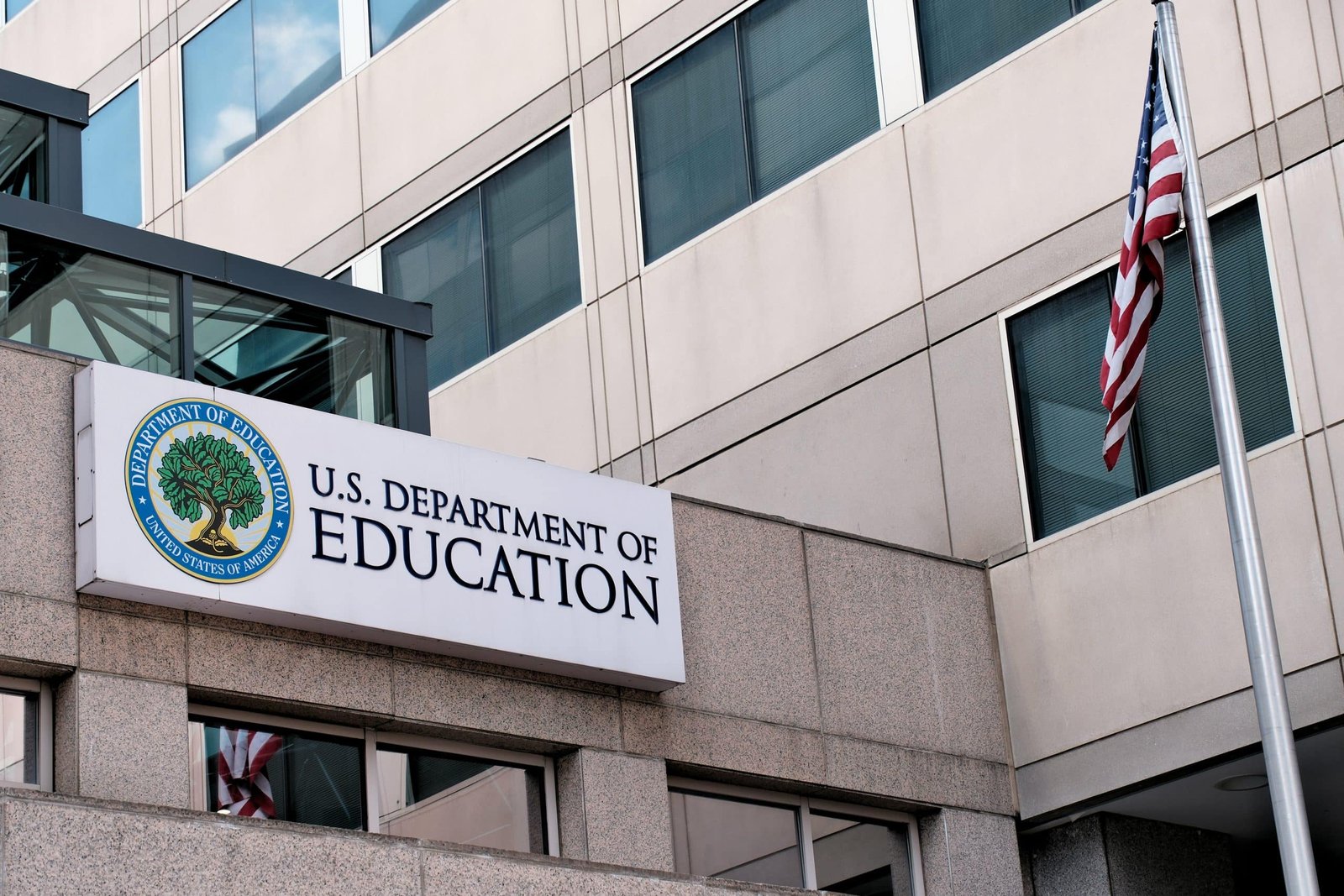
A federal judge in Boston has struck down the U.S. Department of Education’s anti-diversity, equity, and inclusion directive. The Trump administration used that directive in February 2025 to cancel roughly $600 million in federal grants that trained new teachers.
U.S. District Judge Angel Kelley vacated the directive in a final order issued Thursday, Sept. 17. She ruled that both the directive and the department’s termination of the teacher-training grants tied to it were unlawful.
The decision is a win for eight Democratic-led states: California, Colorado, Illinois, Maryland, Massachusetts, New Jersey, New York and Wisconsin. They kept fighting the cuts even after the U.S. Supreme Court let the department move ahead with them in April 2025.
“Arbitrary and capricious”
Kelley found the directive violated the Administrative Procedure Act. She called it “arbitrary and capricious” because the department never explained why it abandoned grant priorities that had encouraged DEI work under earlier administrations. Those administrations, she noted, had cited research and answered public comments when setting the priorities.
Kelley found the directive arbitrary and capricious on four separate grounds. She also held it contrary to three independent sources of law: the statutes governing the grant programs, the notice-and-comment requirement of the General Education Provisions Act (GEPA), and the federal Uniform Guidance’s limits on terminating grants after they are awarded.
The judge also found that the policy gave no clear criteria for deciding which programs counted as DEI. In practice, she wrote, the department cut grants whose goal was to fight discrimination:
“Rather than confining the Directive to actions that are traditionally understood to constitute discrimination, the record instead reflects that Defendants terminated grants with topics such as ‘acknowledging … racism’ and ‘anti-racism’ — activities expressly undertaken to oppose discrimination.”- District Judge Angel Kelly
Kelley faulted the speed of the rollout, too. The department ended 104 of the 109 grants in the two programs in about two weeks, 40 of them in the plaintiff states. She wrote that the rush, the scale of the damage and a thin administrative record “leave serious doubts” about the decision.
She also said the department ignored who would be hurt. “The Directive does not acknowledge the fact that thousands of teachers, as well as teachers in teacher-training pipelines, would be affected, upending the careers of much-needed educators,” Kelley wrote.
How the cuts happened
Trump’s Department of Education issued the directive in early 2025 and announced it was ending grants under the Teacher Quality Partnership (TQP) and Supporting Effective Educator Development (SEED) programs. Both fund the preparation and development of K-12 teachers, and TQP grants pair colleges with high-need school districts.
The department said the grants trained teachers in “divisive ideologies.” It listed critical race theory, DEI, social justice, anti-racism, white privilege and white supremacy among its targets. Grantees received a form letter that gave little explanation beyond those concerns.
One application the department singled out asked: “practitioners to take personal and institutional responsibility for systemic inequities (e.g., racism) and critically reassess their own practices.” Others ran workshops on dismantling racial bias.
The losses were large in some states. State attorneys general have sued the federal government over its termination of grant programs operating in their states, as well as for dismantling the Department of Education. One case dealt with the termination of over $600 million in nationwide grant funding for K-12 teacher preparation programs.
A federal judge first halted the cuts in March 2025. In April 2025, the Supreme Court paused that order, allowing the terminations to take effect while the lawsuit continued.
The department’s defense
The Education Department defended the cuts. “Taxpayer dollars should support preparing teachers for meaningful student learning, expanding the pipeline of high-quality teachers, and retaining top talent — not funding divisive ideology or racial preferences,” press secretary Savannah Newhouse said in response to the lawsuit.
In court, the department’s lawyers argued the directive reached all DEI activity because all DEI is inherently discriminatory, according to the ruling. They also argued the states lacked standing and that the case was moot, since June 2025 guidance had replaced the directive.
Kelley rejected both arguments. She noted the department has never backed away from its position that the directive was lawful.
What happens next
The ruling does not bring the money back. Kelley said any claims to recover lost grant funds belong in the U.S. Court of Federal Claims, not her court. She also declined to issue a separate injunction, finding the vacatur and declaratory judgment sufficient.
The Department of Education has said it stopped relying on the directive in June 2025. As of Sept. 21, it had not said whether it would appeal.
For colleges and districts that lost TQP and SEED funding, the decision offers a legal footing but no immediate relief. Many of those programs recruited and trained teachers for hard-to-staff schools, and it remains unclear how many can be rebuilt.
The decision joins a growing line of federal court rulings blocking anti-DEI funding actions. It also deepens the compliance uncertainty facing employers and institutions that hold federal grants or contracts.

