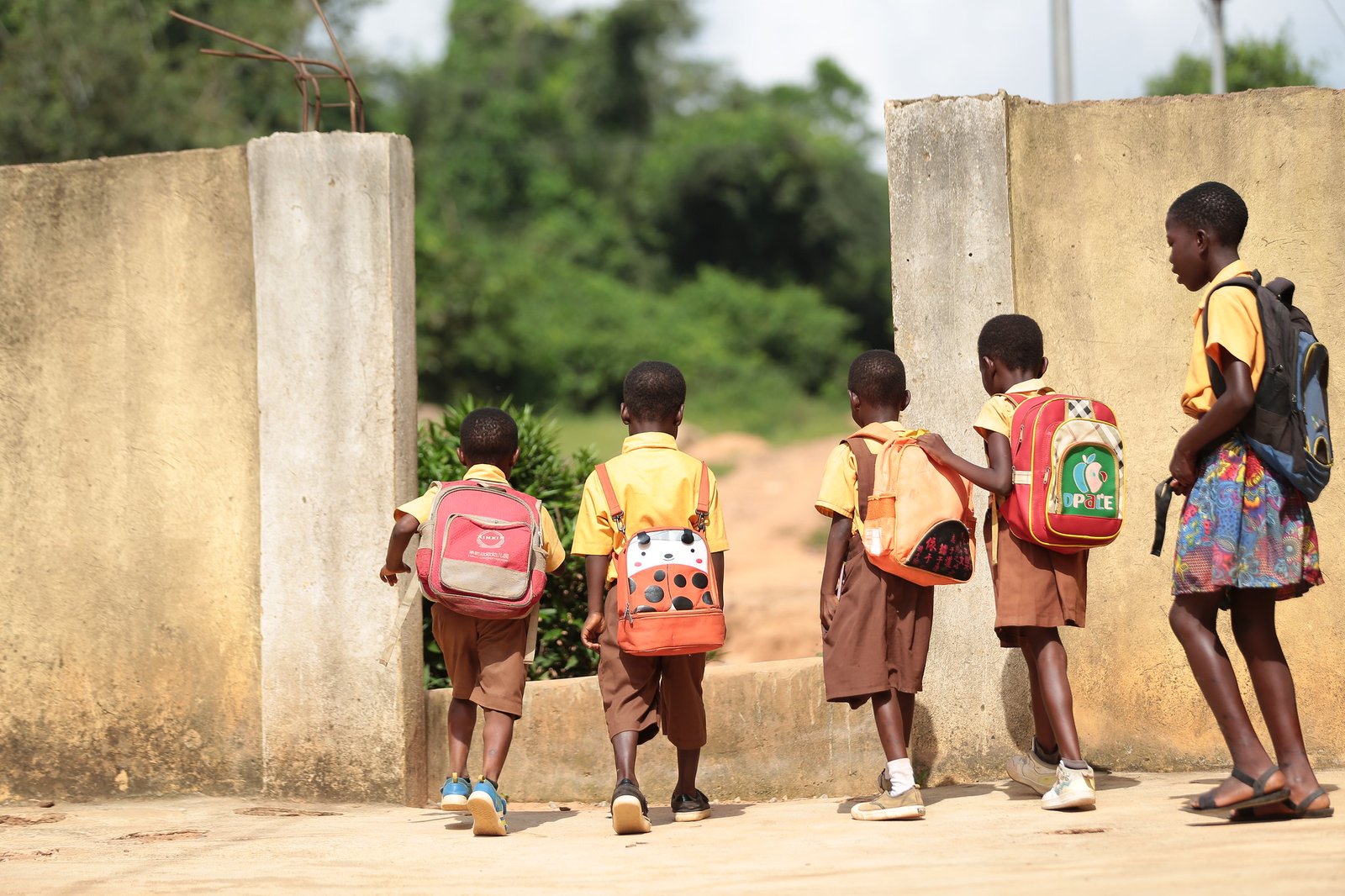
September is synonymous with going back to school across the Northern Hemisphere, where classrooms are reopening and a new academic year is beginning. In many countries of the Southern Hemisphere, meanwhile, students are returning from a mid-year break or entering the final months of the school calendar.
The moment offers a moment to reflect upon who is in school and who is not. A series of blogs will reflect on what we mean when we talk about access to education. Some may enter; some may enter late, drop out early, repeat years and so on. Together, as we presented in the 2026 GEM Report on access and equity, these are all key measures of successful and inclusive education systems. This first blog looks at the first step: entering school. What do we know?
While headlines have focused on the number of out-of-school children and youth for the past 25 years, it is easy to forget that the number of those in school has been growing rapidly. Between 2000 and 2024, enrolment grew by 19% in primary, by 28% in lower secondary and by 73% in upper secondary education.
In total, there are 327 million more students in primary and secondary education today than there were in 2000, of which 125 million are in primary and 202 million in secondary education.
These changes vary a lot by region, however. While enrolment levels fell in Europe and Northern America in both primary and secondary education between 2000 and 2024, they more than doubled in primary education and more than tripled in secondary education in sub-Saharan Africa. In low-income countries, secondary education enrolment has almost quadrupled.
One contributing factor to these differences is population growth. In the first quarter of the century, the school-age population fell by 9% in upper-middle- and high-income countries but increased by 25% in lower-middle-income countries and doubled in low-income countries. These diverging demographic trajectories will continue, leading to different challenges in access to education in coming years. According to the United Nations’ World Population Prospects 2024, the global school-age population is expected to decrease by 4% between 2025 and 2050. Here again, different regions face very different prospects. While the school-age population is projected to increase by 37% in sub-Saharan Africa, it is projected to decrease by 37% in Eastern and South-eastern Asia.

Behind the numbers enrolling, however, are the numbers of those left behind.
While 1,433 million were attending primary and secondary school globally in 2024, it is also estimated that 273 million were out of school. Of these, 79 million were primary school age children, 64 million adolescents of lower secondary school age and 130 million youth of upper secondary school age. As we reported widely at the time of our latest report’s release, the number of out-of-school children and youth has risen for seven consecutive years.
While rates are improving in Central and Southern Asia, together with sub-Saharan Africa, the two regions jointly account for three quarters of the global out-of-school population.
Total numbers can seem abstract, while rates give a better idea of opportunity. Globally, about 10% of primary school age children, 15% of lower secondary school age adolescents and 31% of upper secondary school age youth are out of school. In low-income countries, this rises to 24%, 42% and 56% respectively.
The stagnation kicked in around the year 2015, as this figure shows. There has been no progress in five of the SDG regions at all, and possibly in six out of the seven regions, although data for Oceania are insufficient to draw a firm conclusion.
Entering school is the measure that feels the easiest to grasp onto when we talk about access to education, but this has to be contextualized with more information about what happens to those children when in school. Will they stay in school? Will they complete on time? The next blogs will look at some of these details in more depth. Back to school some might be, but if we really care about the health of our education systems, we need to know what happens to these children next.


