By: Manos Antoninis, Director, GEM Report
In recent years, education discussions have been dominated by a deceptively simple question: What works? Governments, donors and international organizations have searched relentlessly for straightforward solutions to education problems. Which intervention raised attendance by 5%? Which pilot improved learning outcomes by half a standard deviation? Which policy can be transferred in another country?
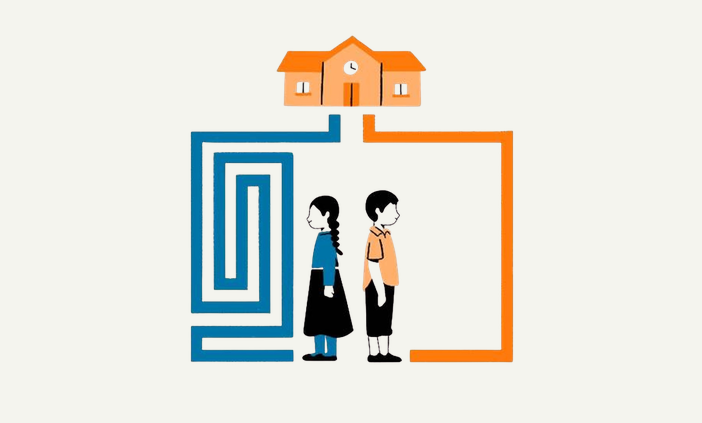
But what if we instead asked: What matters? How does lasting change actually happen in education systems? This question is less glamorous and much more complex than having two otherwise equal groups and trying to compare their response to an intervention a year later. It is the question at the centre of the GEM Report Countdown to 2030 series. The premise is that this a more fruitful way to better understand how education systems have made a breakthrough to achieve long-term improvements.
In the 2026 GEM Report, which focuses on access and equity, Albania, Bangladesh, China, Morocco and Uzbekistan were among the countries examined for having expanded education participation faster than their peers over 25 years. A common finding is that they did so not because of a single intervention of the kind that catches the academic conference headlines. In fact, rarely were such interventions even among those credited with a strong impact in these case studies. Rather, progress emerged cumulatively through political commitment, institutional development, and multiple but coherent policy choices. No one single thing ‘worked’. But many different combinations of factors did.
Short cuts are tempting
When research establishes measurable results in one setting, it is not a surprise to see those results promoted as scalable answers for all settings. But a one-year evaluation is only going to say about that intervention and how it worked in specific conditions. Such studies can be insightful. But it is a leap to assume that their findings could also say whether a country can sustain such an intervention at national scale change over decades and deliver similar results. And it is also highly unlikely that such findings can give a definitive answer on whether a year-long project might also be able to fix the deeper structural problems that keep millions of children out of school and not learning in the first place. There is a paradox in touting solutions that are robust and evidence-based but blind to the broader context in which the evidence was generated.
Of course, policymakers are often tempted by highly visible interventions with immediate results because they align neatly with political cycles and – in poorer countries – with donor expectations. As the 2024/5 GEM Report showed, education ministers are in office for two years on average, making short-term gains more attractive than long-term institution building. A child entering preschool today may experience six or seven ministers of education before finishing secondary school. Education reform often takes generations.
Stepping back and analysing educational expansion over 20 or 25 years, as the 2026 GEM Report has tried to do, it becomes evident that looking for what works might be misleading. The drivers of long-term change are often more mundane: better governance arrangements, more equitable financing, improved legal frameworks, stronger social protection systems, expanded infrastructure and political decisions that remain consistent across administrations. It is not a coincidence that these things are genuinely hard to measure. System change takes years and cannot be packaged. Enhancing a teacher’s capacity takes years, for instance.
Equally important, even if harder for many in the education world to admit, educational expansion and improved learning often happen for reasons outside education policy altogether. Expanding labour market opportunities, the indirect impact of migration, a rallying behind the sense that the country is left behind its peers, post-conflict stability, improved health and nutrition – all these can be as important as anything happening inside classrooms.
Because of the need to take a long view of change, countries need to ask better questions rather than be handed ready-made answers. Instead of a country copying the cash transfers that improved school attendance in Brazil, for example, like a flat-pack box of IKEA furniture, countries need to examine what was the nature of the problem the intervention was trying to solve, what were the factors that enabled success, and whether that matches (or not) their own context: the pre-existing social infrastructure, the particular form of inequalities it was designed to address, the administrative systems required to deliver it. This is far more likely to result in an appropriate and context-specific reform than expecting the import of solutions for someone else’s problem to work. At the end of the day, people may even disagree at the interpretation of why a country has done well in education, as a recent debate on Finland highlights.
This is also important in the context of external financing for education declining. There is a danger of doubling down on quick fixes because they appear cheaper and easier to measure. But if we search for fast solutions, the money spent may be squandered. Quick solutions must be questioned for whether they can be maintained once projects end or political priorities shift.

Principles are better guidance than policy solutions
The conclusion to draw is not to be relativist and suggest that anything goes. Some principles emerge consistently across countries that have made sustained progress. Principles are not prescriptions. They are not universal solutions but instead point to things that consistently matter. They allow for flexibility in application, recognizing that countries may pursue different pathways towards shared goals depending on their histories, institutions and political realities.
Based on the 35 countries analysed in depth in the 2026 GEM Report, equitable approaches are without a doubt essential to improve access to education on a large scale. The countries that made lasting gains built systems that anticipated who was going to fall through the cracks using data and compensated for it with investment. But the precise equity-oriented approach to take is not something that can be prescribed. Different solutions will be required to fit the context and problem at hand. Another principle linked to long-lasting change is that education cannot be improved without also dealing with health, social protection and infrastructure systems.
Asking what works expects universally transferable solutions to be found. Asking what matters looks for the conditions, institutions, and commitments without which no solution can take hold. It is a different, perhaps more honest version of guidance. It says: here is what we know about what conditions have consistently enabled progress. Here are countries that started from a similar place as your country and moved ahead. Study them, do not copy what they did, but try to understand what problem they were trying to solve and whether there are any links with your case. Build your institutions first. Keep equity at the centre. And think in decades, not projects. This approach does not pretend there is a holy grail of what has worked, but directs attention to governance, finance, equity, legislation and capacity. These are harder to sell, but if education targets are to be achieved, not just by 2030 and beyond, it is the place to start.


