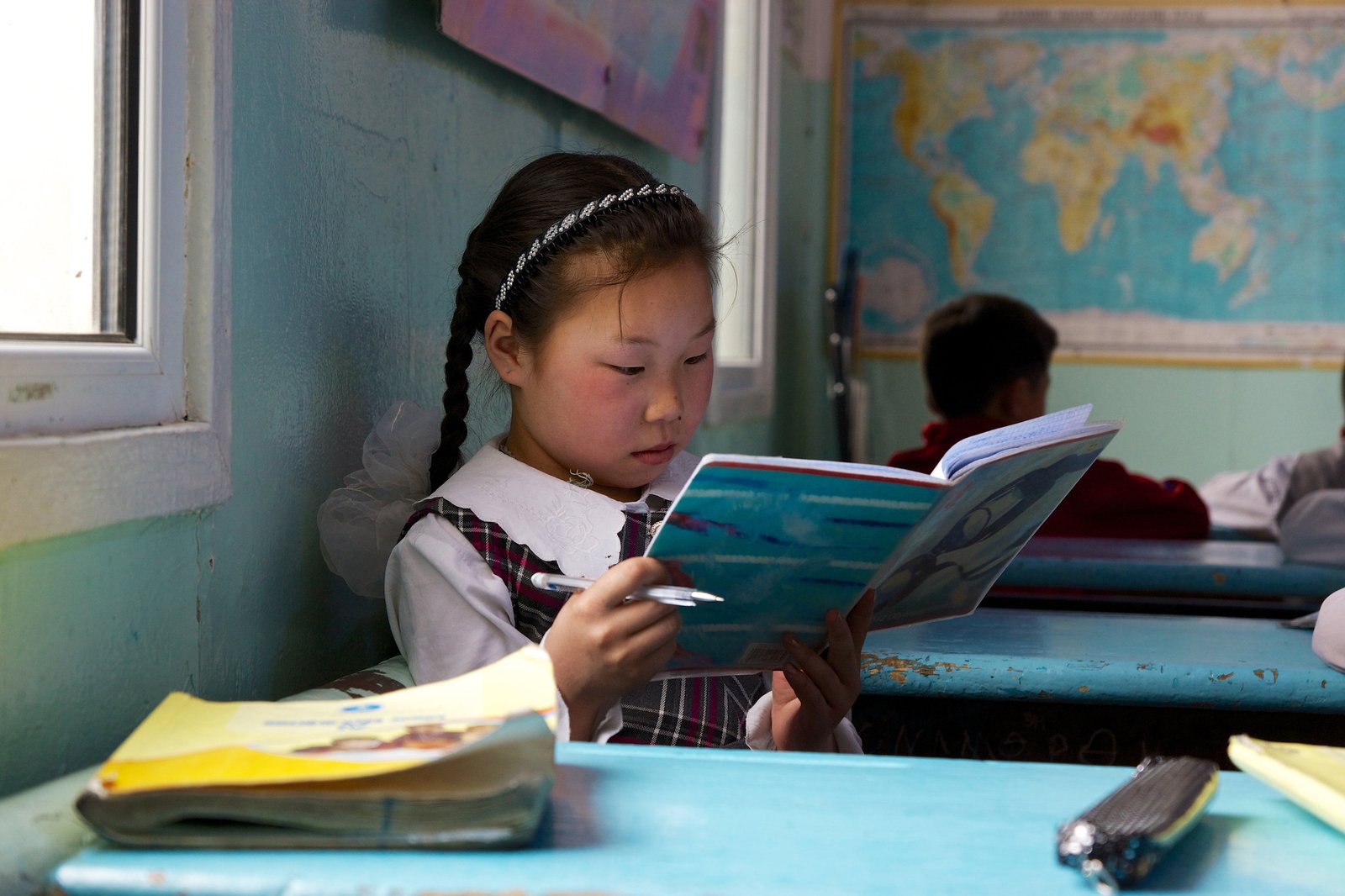
International Literacy Day is a celebration of progress in people’s ability to read around the world. There is indeed much to celebrate. The global youth literacy rate has risen from 87% in 2000 to 93% today, while the number of young people considered illiterate has fallen by 40%, from 143 million to 86 million.
But these encouraging figures conceal a fundamental problem: what do we actually mean when we say that someone can read?
Reading is not the same as understanding
Global literacy estimates generally set a very low bar. They may record whether a person can read a short sentence, often relying on self-reported or indirect information. They do not necessarily show whether that person can understand a text, navigate written information or use reading skills in everyday life.
Nor is literacy measured consistently across countries. In some surveys, respondents are simply asked whether they can read and write. In others, they must demonstrate their skills. Even these assessments differ: some ask people to read a short text and write a letter, while others require them to read and write a message. Some permit any language; others impose one. In certain countries, people are automatically classified as literate after completing a specified number of years of schooling.
The SDG global indicator on youth and adult literacy (for target 4.6) therefore conceals very different definitions and levels of ability. More worryingly, it is not aligned with the SDG global indicator on the minimum proficiency level in reading for school-age children (for target 4.1). This creates confusion. The 2026 GEM Report showed that 75% of young people are officially considered literate in low-income countries. Yet school-level assessments suggest that only about 10% of primary-school-age children achieve minimum proficiency in reading. This latter definition includes comprehension. While these differences in definitions (e.g. in age groups and skill levels) are explained in the small print, the contrast raises serious questions about how much headline literacy rates tell us.
The GEM Report, in partnership with the UNESCO Institute for Statistics and the International Institute for Applied Systems Analysis, is currently working on a project to revisit existing data and new generate literacy estimates compatible with a range of literacy level definitions, the results of which will be published in 2027.
Different estimates depending on the data collection method is one problem – but the case of Peru also illustrates how different sources also illustrate within-country inequality. A national household survey classified 95% of adults as literate. But a direct assessment found that only 29% reached a minimum level of literacy proficiency. Among adults whose parents had not completed upper secondary education, the proportion was just 17%, compared with 57% among those with at least one tertiary-educated parent. A national average can therefore obscure both the true level of people’s skills and the inequalities between them.
Headline literacy levels are not inaccurate only in poor countries
The scope for confusion is greatest in poorer countries. The youth literacy rate in low-income countries is 75%, compared with near-universal literacy in middle- and high-income countries. While the number of young people lacking literacy skills has fallen globally, it has risen in low-income countries, from 34 million in 2000 to 37 million today. These countries now account for 43% of the world’s illiterate youth, up from 24% in 2000.
But richer countries have not truly achieved universal literacy except when the bar is set too low. More demanding assessments that also include comprehension reveal a different picture. In 2023, one in four adults across 29 high-income countries and territories lacked skills to understand longer texts, navigate simple digital documents and draw basic inferences from written information.
In many countries, literacy levels may even be deteriorating. Among 18 countries and territories with comparable data, adult literacy has stagnated or declined in most since the mid-1990s. The share of adults reaching at least a minimum level in the Programme for the International Assessment of Adult Competencies (Level 2) fell by 11 percentage points in Germany, 10 points in Czechia and 8 points in the United States. Despite staying longer in education, younger generations are not outperforming older ones.
Are adults being given a second chance to learn?
Counting how many people can read a short sentence is no longer enough. Today, functional literacy involves understanding, evaluating and using information across printed and digital environments. Without these skills, people may struggle to access public services, find employment or participate fully in society. These are competencies growing in importance for education to remain relevant to the challenges facing our planet today.
This means that efforts to improve measurements must therefore be matched by better opportunities to learn. Improving literacy among people who have already left school is difficult, and adult literacy programmes rarely operate on the scale needed to change national outcomes. Governments frequently rely on civil society organizations to provide programmes that remain small and localized. Even participation in adult literacy programmes had to be dropped from the SDG 4 monitoring framework because so few countries collected the necessary data. We therefore know too little about both the skills adults possess and whether those most in need are receiving support.
There is another reason to question what rising adult literacy rates really represent. In many countries, improvement appears to come mainly from younger, better-educated generations replacing older generations in the population, not from adults acquiring literacy skills later in life. Analysis of survey data in Cambodia, India, Kenya and Nepal found that the literacy levels of the same generations remained unchanged or even fell slightly as they grew older. This suggests that adult literacy programmes, even when effective, have rarely reached enough people to affect national trends.
Family literacy programmes offer one promising response. By enabling parents and children to learn together, they can strengthen adults’ skills while helping parents support their children’s education. But their scale is also limited.
Literacy affects every part of life
This matters far beyond education. Literacy can determine whether people can understand health information, use digital and financial services and exercise their rights. Literate women are more likely to benefit from health campaigns and have greater access to information that can help them challenge harmful gender norms. In some settings, the relationship is stark: among women in urban areas of Palestine, the difference in the use of modern contraception between those classified as literate and illiterate was 35 percentage points.
The international community recently returned to the traditional literacy measure for monitoring global progress because so few countries had assessed multiple literacy and numeracy levels directly. This was a pragmatic decision, but it should not become the end of the conversation.
This International Literacy Day, the message should be clear: literacy is not simply the ability to read words. It is the ability to understand and use them. This means measuring what truly counts and providing meaningful opportunities for people of every age to keep learning.

