Overview:
The piece argues that the Jason Arday controversy shows why universities should adopt clear, universally applied processes for independently verifying personal claims they publicly endorse, much as K–12 schools verify documented learning needs, in order to protect both individuals and institutions from inconsistency, favoritism, and reputational harm.
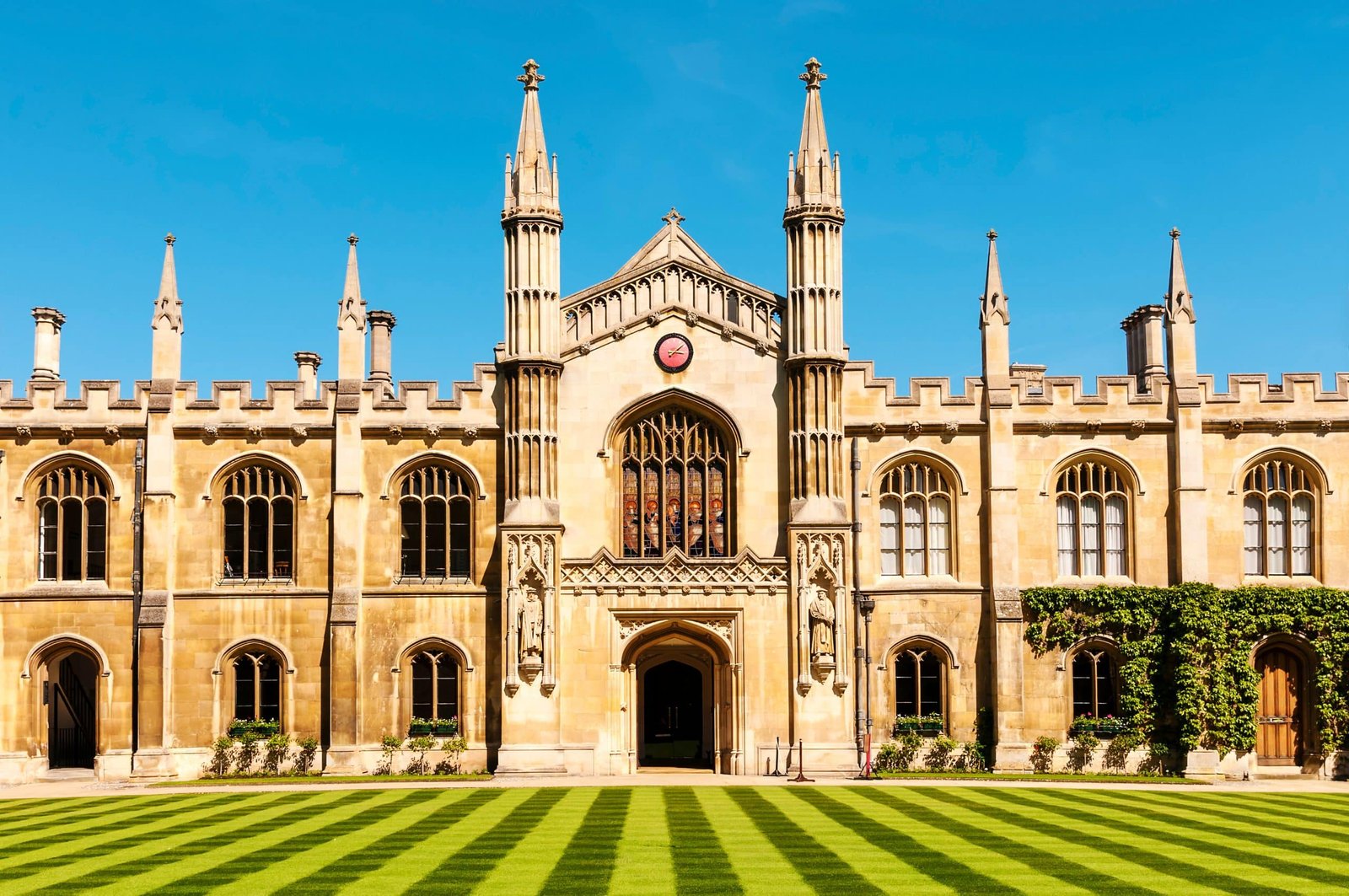
Jason Arday was a Professor of the Sociology of Education at Cambridge University who was recently found dead after the University said it would investigate accusations of plagiarism as well as unusual claims he made in his biography. His story has spread beyond the United Kingdom, as both conservatives and liberals have used Arday’s story to rehash familiar talking points around affirmative action.
Before I discuss this story, I want to acknowledge that this is a clear tragedy. I feel enormous sympathy for Dr. Arday, his wife, his two children, and everyone who is grieving.
Humans are poorly equipped to deal with rejection on a global level. A generation ago, Dr. Arday could have been the talk of England and moved away and started anew. Technology has made “starting over” impossible. We should not lose sight of this.
In the wake of this tragedy, I would like to address two issues: the importance of independently verifying self-reported learning difficulties and the responsibilities institutions have to protect people they choose to lend credibility to.
————————————————————————————————————
Dr. Arday’s story is unique, particularly because so much emphasis was placed on his personal story of overcoming significant developmental hurdles, such as mutism, autism, and illiteracy. His story of overcoming so many challenges is inspiring and was highlighted by Cambridge upon formally announcing his hire.
A look at the actual announcement from the University of Cambridge of the appointment of Dr. Arday is extremely illuminating.
“Jason Arday is an exceptional scholar of race, inequality and education… His experiences highlight the barriers faced by many under-represented groups across higher education and especially at leading universities. Cambridge has a responsibility to do everything it can to address this by creating academic spaces where everyone feels they belong.”
Cambridge indicated that it has a responsibility to be as inclusive as possible. I would add that once Cambridge used Arday’s personal narrative in framing his appointment, they had a responsibility to verify these claims.
———————————————————————————————————–
I see the importance of verifying claims of neurodivergence with independent documentation in my career as a NYC science educator. Last year, on the first day of school, I handed students science journals, which I required for the lab.
That night I got an email from one of the students’ parents. They preferred that Ellen (not her actual name) do the assignments on her tablet due to her dysgraphia challenges.
I responded by politely referring to my syllabus, which states that any accommodations for note-taking or test-taking require a note from a health professional documenting the condition that necessitated the device.
Rather than dealing with the cases individually, it was decided as an institution that all claims for formal accommodation needed professional documentation in order to get support. It was not up to me whether or not to give Ellen extra time because our institution decided that we do not give accommodations without verification.
What does this have to do with Jason Arday?
Whether we like it or not, the culture has shifted dramatically in the past few decades to accommodate neurological issues in education.
My school decided to enact a universal rule that required independent verification of all claims related to learning challenges. This policy pre-emptively removed the potential contest of wills.
This should occur for any efforts to make decisions specifically related to self-identified learning challenges.
This is how I believe Cambridge should have operated;
We have appointed a professor who says that he is autistic.
Cambridge: How can we best support him so that he can succeed in this intensely high-pressure academic environment?
We want to publicly promote our new professor’s story that he is autistic, was mute until age 11, and couldn’t read or write until age 18.
Cambridge: Once we publicly share these claims as fact we are responsible for them. Therefore we need to independently corroborate this information before we publicly promote him.
This leaves us with an obvious question; how come a small NYC middle school figured out how to handle neurodiversity claims but Cambridge has not?
There are lots of opinions that are being shared right now that I don’t want to explore. The wonderful thing about a good rule, universally applied, is that it eliminates the need for trying to understand personal motivations! Cambridge should have had universally applied procedures
to independently verify claims they publicly present as fact in place to make my suspicions irrelevant.
The universality of the process is a key component. What would happen if one teacher accepted Ellen’s claim of dysgraphia and another teacher did not?
If I had individually decided that Ellen deserved to have a laptop in the classroom but another teacher decided she didn’t need it, there is potential for a hidden judgment of Ellen’s character. “Oh Ellen is just gaming the system. She knows how to pluck Mr. T’s heart strings and is getting one over on him,” might be left unspoken but would be present. The institutional independent verification bypasses all of that. Individuals might not believe she “really” needs the laptop, but because we followed a universal standard, there is no room for criticism. In other words, the universal application of a rule protects the school and the student from accusations of favoritism or other criticisms.
The second, and more important issue in the wake of this tragedy, is the importance of addressing how human beings pay a different penalty than an institution. Regardless of how anyone chooses to assign blame for this tragedy, we all can agree that 800-year-old universities can weather reputational damage in a way that human beings cannot. Once Cambridge publicly endorsed extraordinary, unverified claims about someone appointed to such a prestigious position, intense scrutiny of those claims was predictable. Cambridge should learn from a NYC middle school and follow their lead.
Selim Tlili is a science educator with more than two decades of classroom experience in New York City. He is a lecturer at Seton College and Hostos Community College and is a clinical science supervisor at Hunter College. He is the author of Sketching for Science, and his writing has appeared in The Hill, Edutopia, The Educators Room, and We Are Teachers. Find his work at Selim.Digital.

